What Does It Mean to Be Meek? Lessons from Psalm 37 and Matthew 5:5
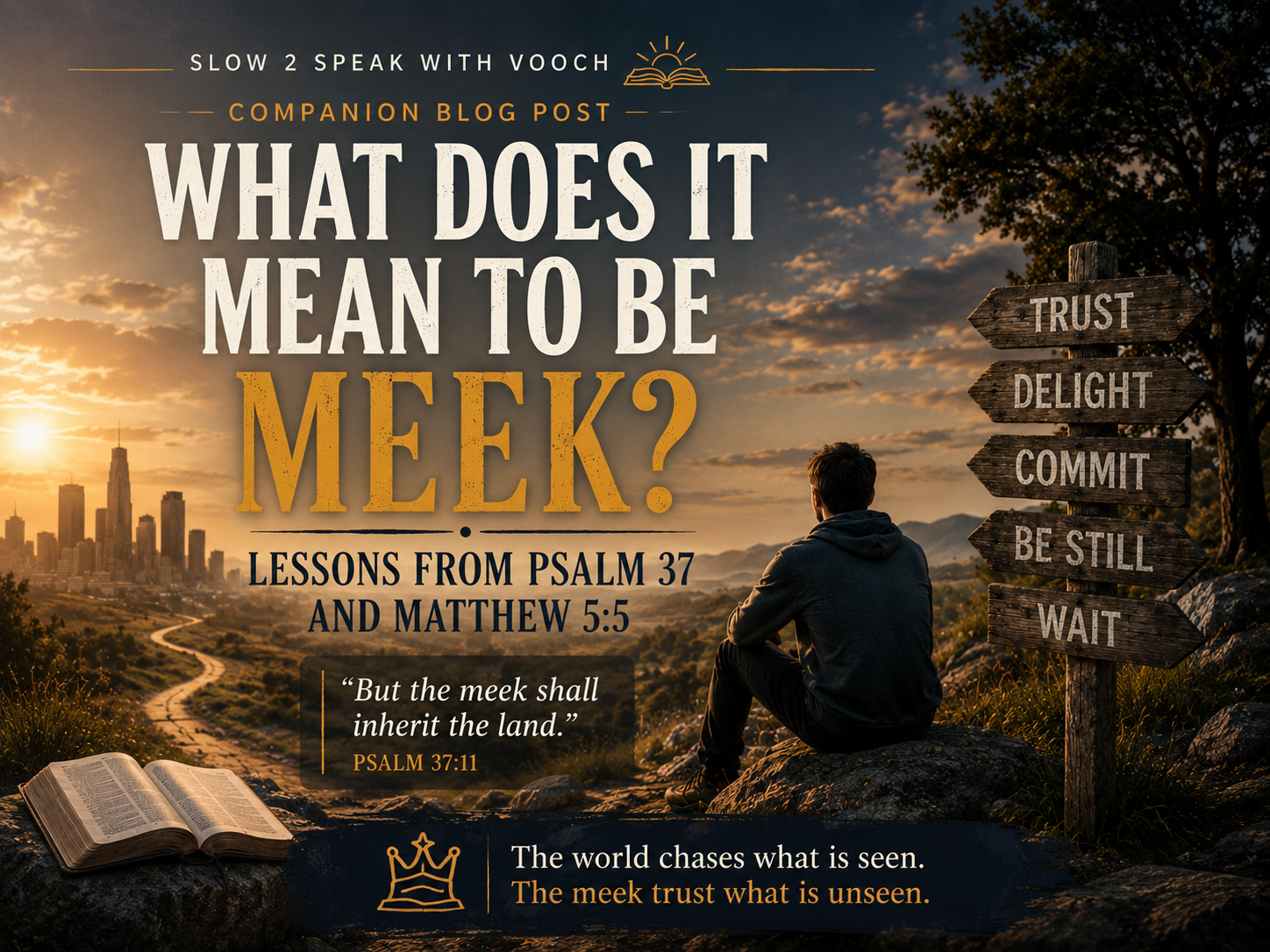
If you've ever wondered what Jesus meant when He said, "Blessed are the meek, for they shall inherit the earth," the answer begins long before the Sermon on the Mount. In Psalm 37, David paints a picture of biblical meekness—not as weakness, but as the quiet strength of trusting God when everyone else seems to be getting ahead. As I studied this passage, I discovered that Psalm 37 isn't just about the wicked prospering; it's about guarding our hearts from comparison and learning to trust God's character above our circumstances.
One of the biggest surprises in my study of Psalm 37 wasn't discovering what meekness is. It was discovering what meekness isn't.
When Jesus said, "Blessed are the meek, for they shall inherit the earth," He wasn't introducing a new idea. His audience would have recognized the language from Psalm 37, where David writes, "But the meek shall inherit the land." Instead of giving a definition, David paints a picture of the kind of person who lives by faith while everyone around them seems to be playing by different rules.
Why Comparison Steals Our Peace
That picture feels surprisingly modern.
Every day we're surrounded by opportunities to compare our lives with someone else's. We scroll through social media and see promotions, vacations, new homes, growing businesses, and viral success. Before we know it, our eyes have drifted from what God is doing in our own lives to what He appears to be allowing in someone else's.
David understood that struggle long before smartphones existed.
That is why he begins Psalm 37 with an unexpected command: "Do not fret because of evildoers."
At first glance, "fret" sounds like another word for "worry." But the Hebrew idea is richer than that. It describes becoming heated or stirred up on the inside. David is warning us about something deeper than anxiety. He's warning us about what happens when someone else's success begins to shape our emotions, our attitudes, and eventually our decisions.
Comparison has a way of doing that.
It rarely begins with jealousy. It usually starts with curiosity. We wonder how someone else is doing. Then we wonder why they're succeeding. Finally, we begin questioning whether following God is really worth the slower path.
David refuses to let us stay there.
Instead of obsessing over people we cannot control, he repeatedly turns our attention back to God.
Trust in the Lord.
Do good.
Delight yourself in the Lord.
Commit your way to the Lord.
Be still before the Lord.
Wait patiently for Him.
Notice how every command redirects our attention. The solution to comparison isn't becoming more disciplined at ignoring other people. It's becoming more captivated by God.
Trust Begins with God's Character
One phrase especially challenged me: "Delight yourself in the Lord."
Delight isn't something we usually manufacture. It grows through relationships.
Think about the people you enjoy spending time with. That enjoyment probably didn't appear overnight. It developed through conversations, shared experiences, trust, laughter, and simply being together.
The same is true with God.
The more we spend time with Him in His Word, the more we recognize His faithfulness. The more we recognize His faithfulness, the easier it becomes to trust Him. Trust eventually grows into delight because we begin enjoying the One we have come to know.
That progression helps explain why David keeps bringing us back to God's character instead of our circumstances.
One of the illustrations that came to mind during this study involved my wife's sister. We were discussing plans that had already been made, and without needing every detail explained, she simply trusted the decision because she trusted the person who made it.
That stayed with me.
Real trust isn't knowing every answer. It's knowing the character of the One you're trusting.
Perhaps that's why David could write with such confidence. He wasn't asking us to trust in good luck or favorable circumstances. He was asking us to trust a faithful God.
What Moses Teaches Us About Meekness
As I continued studying the psalm, another realization emerged.
Meekness is often misunderstood as weakness, passivity, or timidity. Yet the biblical examples point in the opposite direction.
Moses is called the meekest man on earth, but he confronted Pharaoh, led Israel through the wilderness, interceded for a rebellious nation, and repeatedly placed God's glory above his own reputation.
His strength wasn't diminished by meekness.
It was directed by it.
The meek are not people who lack power. They are people who have surrendered control to God.
That perspective also sheds light on one of Psalm 37's most encouraging promises: "The Lord makes firm the steps of the one who delights in Him."
God directs people who are walking with Him.
That doesn't mean every step is easy or every decision is obvious. Sometimes, like the Apostle Paul on his missionary journeys, we move forward faithfully only to discover that God is redirecting us toward something we never expected. Guidance often comes while we are already following Him, not while we are standing still waiting for perfect certainty.
A Lifetime of Trust
David knew this because he had lived it.
Near the end of the psalm, he writes, "I have been young, and now am old."
Those words are more than poetry. They are testimony.
David had seen victories and failures, seasons of abundance and seasons of waiting. Looking back over his life, he concluded that God's faithfulness was greater than the temporary success of the wicked.
That perspective is exactly what Psalm 37 invites us to embrace.
The people who seem to have everything today are not writing the final chapter.
The applause of this world is temporary.
The approval of God is eternal.
Jesus didn't quote Psalm 37 because He wanted His followers to become quiet or passive. He quoted it because He wanted them to become the kind of people whose confidence rested so completely in their Father that they no longer needed to chase what everyone else was chasing.
Maybe that's the quiet strength of the meek.
They have learned that peace doesn't come from getting ahead of everyone else.
It comes from walking faithfully with God, trusting that the One who orders their steps knows exactly where He is leading them.
Listen to the Companion Podcast Episode
This article grew out of this week's Lo-Fi Fridays reflection on Matthew 5:5 and the rich foundation of Psalm 37. While the podcast explores the passage through conversation and personal reflection, this article provided an opportunity to go a little deeper into David's portrait of the meek and how trusting God's character frees us from the trap of comparison.
If you enjoyed this article, I invite you to listen to the companion podcast episode and continue the conversation as we explore what it truly means to inherit the earth by trusting the One who holds our future.
Listen to the Podcast

Comfort Before the Answer Arrives


